
Water Directed Away Before Damage Starts
Gutters & Drainage Systems in Jamestown for preventing foundation erosion and basement moisture caused by uncontrolled runoff
Mitchell Dossey Contracting LLC installs gutters and drainage systems that channel water away from your home's foundation. You avoid the soil washout, pooling near basement walls, and interior moisture problems that occur when roof runoff is left unmanaged. Western New York sees heavy rain in spring and fall, plus significant snowmelt in late winter, all of which need controlled routing to prevent long-term damage.
The installation begins with measuring roof edges and determining downspout placement based on grade and drainage paths. Gutters are hung with a slight slope toward downspouts so water does not pool in sections or overflow during storms. Fascia brackets are spaced to prevent sagging, and seams are sealed to eliminate leaks. Downspout extensions or underground drains carry water at least six feet from the foundation, directing it to areas where it can absorb safely or flow away from the structure.
Contact the team to schedule an evaluation of your roof line and discuss downspout placement around your property in Jamestown.
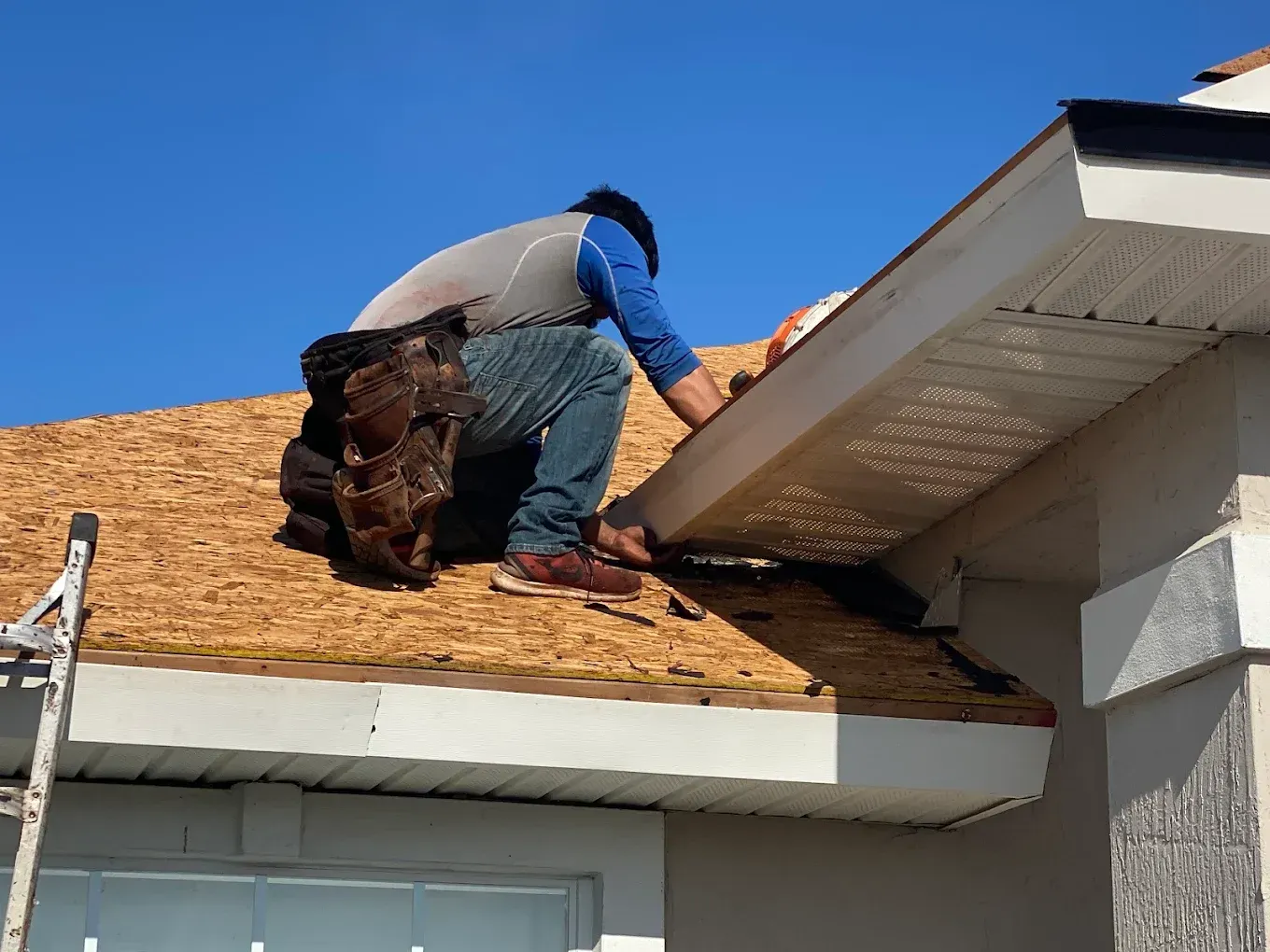
What Proper Slope and Fastening Accomplish
Your gutter system must move large volumes of water quickly without pulling away from the house or spilling over the edges. Each section is pitched at least a quarter inch per ten feet of run to maintain flow toward downspouts. Hidden hangers or fascia brackets are installed every two to three feet to support the weight of water and ice. End caps and corner miters are sealed with caulk rated for outdoor use and temperature fluctuations.
After installation, you will see water flowing smoothly into downspouts during rain, no dripping from seams or corners, and soil around the foundation staying in place rather than washing away. Mitchell Dossey Contracting LLC ensures downspouts discharge far enough from the house to prevent erosion near basement walls. Gutters remain secure through freeze-thaw cycles, and leaf guards can be added if nearby trees drop debris that clogs the system.
Every project includes careful cleanup of metal shavings, old gutter sections, and fastener packaging. Ladders and tools are removed once the system is complete, and landscaping around downspout outlets is left intact or repaired as needed. Work areas are swept and checked for leftover materials before the crew leaves.
Questions About Gutter Performance and Maintenance
Homeowners often want to know how systems handle heavy snow, what materials last longest, and when cleaning is necessary.
What size gutters are needed for a typical home?
Five-inch gutters handle most residential roof areas, but six-inch gutters are recommended for steep roofs or homes with large sections draining to a single downspout.
How do gutters handle snowmelt and ice?
Proper slope and secure fastening prevent sagging when snow slides off the roof, and downspout outlets remain clear if extended away from areas where ice accumulates near the foundation.
Why do some gutters pull away from the house?
Inadequate fastener spacing or brackets that only attach to the fascia board rather than the rafter tails can cause gutters to separate under the weight of water or ice.
When should gutters be cleaned?
In Jamestown, gutters should be cleared at least twice a year, typically in late spring after tree pollen and in late fall after leaves drop, to prevent clogs that cause overflow.
How long does gutter installation take?
Most homes are completed in one day, including removal of old gutters, installation of new sections, and placement of downspout extensions or underground drains.
Mitchell Dossey Contracting LLC has nearly 30 years of experience installing drainage systems that protect homes from water damage. Reach out to discuss gutter sizing, downspout routing, and how the system would integrate with your existing roof and landscaping.